
Summary
OpenAI is taking a major step towards making AI the core of your computer, hiring acclaimed developer Max Stoiber to lead the charge. Announced on social media, Stoiber’s mission is to help “turn ChatGPT into an OS,” signaling a strategic shift from a standalone chatbot to a deeply integrated, platform-level assistant that could redefine human-computer interaction.
In the News
SAN FRANCISCO — In a move signaling a major expansion of its AI ambitions, OpenAI has hired prominent open-source developer Max Stoiber, formerly Shopify’s engineering director, to help integrate ChatGPT directly into operating systems. The announcement, made by Stoiber himself on social media platform X, positions the company to potentially reshape how users interact with their computers.
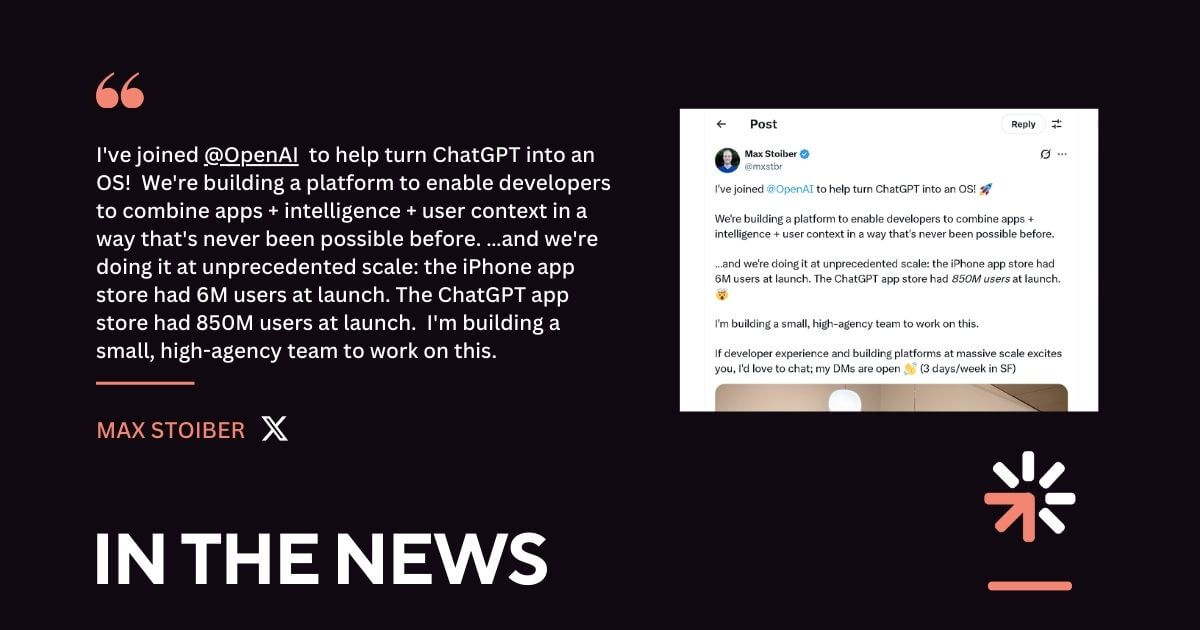
“I’ve joined @OpenAI to help turn ChatGPT into an OS! 🚀,” Stoiber posted from his account on Wednesday. The tweet has since garnered significant attention from the tech community, sparking widespread speculation about the future of AI-assisted computing.
Stoiber is best known for co-creating the popular React-based component libraries Styled Components and Emotion. His background in developer tools and front-end systems suggests OpenAI is focusing deeply on the user experience and integration layer of its AI technology.
While the exact meaning of “turning ChatGPT into an OS” remains open to interpretation, industry analysts see two primary paths:
- Deep System Integration: Embedding a ChatGPT-like assistant as a core, always-available layer within existing operating systems like Windows, macOS, or mobile platforms, controlling applications and workflows through natural language.
- An AI-Native Platform: A more ambitious long-term vision of building a new kind of operating system where an AI agent acts as the primary interface, managing tasks, files, and applications dynamically based on user goals.
This hiring signals OpenAI’s move beyond a simple chat interface, showcasing capabilities where AI can take actions based on verbal commands, such as controlling a user’s computer cursor or performing complex multi-step tasks.
“Bringing in a talent like Stoiber isn’t just about coding prowess; it’s about understanding how to build intuitive, reliable systems that developers and users will trust,” said Amelia Vance, a tech analyst at FutureSoft Advisors. “It signals that OpenAI is serious about moving from a standalone app to a foundational platform.”
OpenAI has not yet released an official statement detailing Stoiber’s specific role or the project’s roadmap. However, his public announcement confirms one of the industry-worst-kept secrets and sets the stage for the next major battleground in AI: the operating system itself.